
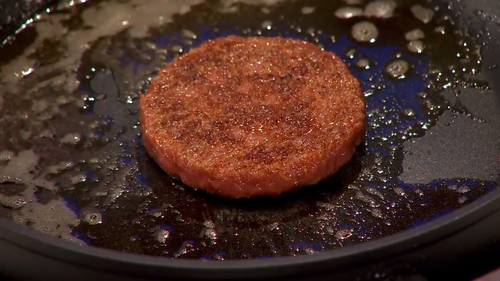
The UK will officially approve at least one cultivated (lab-grown) meat product for commercial sale by the end of 2027.
What Is the UK Cultivated Meat Approval Forecast for 2027?
This forecast predicts that the United Kingdom will officially approve at least one cultivated meat product for commercial sale by the end of 2027. The probability is estimated at 55%. This approval would come from the UK Food Standards Agency (FSA), which is the regulatory body responsible for food safety and standards in England, Wales, and Northern Ireland.
The significance of this approval lies in the UK's role as a major consumer market. If the FSA gives the green light, it would send a strong signal to the global cultivated meat industry and other regulators. It would mark a critical step from laboratory innovation to supermarket shelves, providing confidence for investors and paving the way for broader adoption across Europe.
Why Is the Probability Set at 55%?
The 55% probability reflects a balanced view of progress and uncertainty. On one hand, the process has already started. By mid-2026, at least one application was under formal review by the FSA. This is a concrete sign that the regulatory machinery is moving. On the other hand, the timeline for such reviews can be unpredictable. Detailed safety assessments, labeling requirements, and public consultation processes can extend beyond initial expectations.
The UK is not entering uncharted territory. Regulatory approvals have already been granted in several other countries, including the United States, Singapore, Israel, the Netherlands, Switzerland, and Japan. This global precedent suggests that the science and safety frameworks are mature enough for approval. However, each national regulator conducts its own independent evaluation, and the FSA may have specific requirements that add time to the process.
How Will This Forecast Be Verified?
The verification criterion is clear and official. The forecast will be confirmed only when the UK Food Standards Agency (FSA) makes a formal public announcement of approval. This means that news articles, company press releases, or industry rumors will not count as verification. Only the official decision from the FSA will be accepted as proof. This approach ensures that the outcome is measurable, transparent, and publicly accessible. The exact date of the announcement will determine whether the forecast is successful or not.
What Are the Key Steps in the UK Approval Process?
The FSA follows a rigorous process for novel foods, including cultivated meat. First, a company submits a detailed application with scientific evidence on safety, production methods, and nutritional content. Second, the FSA conducts a thorough risk assessment, often consulting independent scientific advisors. Third, the agency evaluates labeling and allergen information to ensure consumer clarity. Finally, the FSA makes a decision based on all available evidence. This process can take several months or even years, depending on the complexity of the product and the quality of the application.
How Does the UK Compare to Other Countries in Cultivated Meat Regulation?
The UK is currently in a position of cautious progress. Countries like Singapore and Israel have already approved multiple products, while the US has granted approvals for specific chicken products from two companies. The Netherlands has approved tastings, and Switzerland and Japan have also made regulatory advancements. The UK's approach is similar to the European Union's, but with more flexibility post-Brexit. This means the FSA has the authority to move faster than the EU, but it still prioritizes high safety standards. The UK's approval would likely align with international precedents, but with its own specific conditions.
What Factors Could Delay or Accelerate the Approval?
Several factors could influence the timeline. On the delay side, the FSA might request additional data on long-term health effects, production consistency, or environmental impact. Public opposition or concerns about labeling could also slow the process. On the acceleration side, positive outcomes from ongoing reviews in other countries could provide useful data. Additionally, political pressure to support food innovation and reduce carbon emissions might encourage the FSA to prioritize the application. The final decision will depend on the balance between these factors and the specific details of the application under review.
Frequently Asked Questions
Is cultivated meat safe to eat?
Cultivated meat is produced from animal cells in a controlled laboratory environment. Regulatory agencies, including the US FDA and Singapore Food Agency, have reviewed safety data and concluded that approved products are safe for human consumption. The UK FSA will apply the same rigorous standards. Safety assessments typically cover cell line integrity, growth media composition, and absence of contaminants. No approved cultivated meat product has been linked to adverse health effects, but long-term data is still being collected.
Will cultivated meat be labeled as "meat" in the UK?
The FSA is currently developing labeling guidelines for novel foods. In the UK, it is likely that cultivated meat will be labeled with terms such as "cultivated meat" or "lab-grown meat" to distinguish it from conventional meat. The agency will require clear labeling to avoid consumer confusion. The exact wording will be part of the approval conditions. Companies must comply with these rules before any commercial sale begins.
What is the difference between cultivated meat and plant-based meat alternatives?
Cultivated meat is produced by growing actual animal cells in a bioreactor. It is biologically identical to conventional meat at the cellular level. Plant-based alternatives, such as those made from soy or pea protein, are designed to mimic meat but contain no animal cells. Cultivated meat aims to replicate the taste, texture, and nutritional profile of real meat, while plant-based products often require additional processing to achieve similar characteristics. Both are considered more sustainable than conventional livestock farming, but cultivated meat faces higher production costs and regulatory hurdles.