
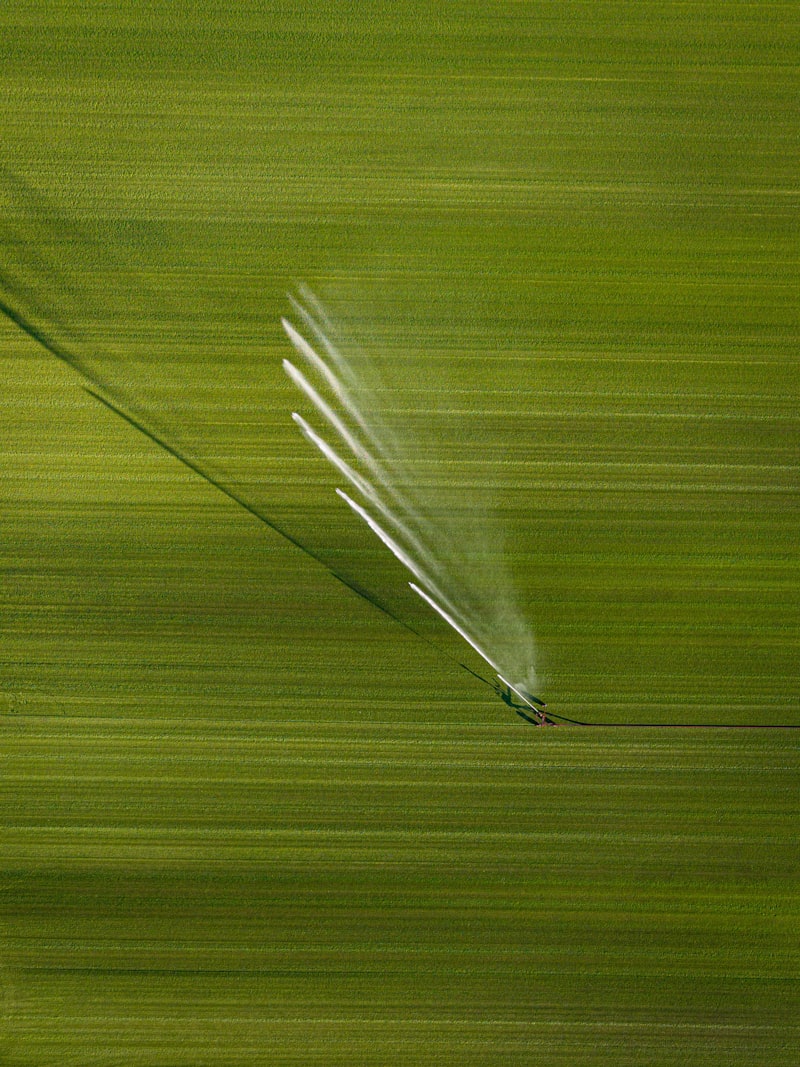
Smart irrigation systems will reduce agricultural water use by 40%
What Is the Role of Water in Agriculture and Why Is Efficiency Critical?
Water is an essential input for agricultural production, but climate change and population growth are making it increasingly scarce. Globally, about 70% of freshwater withdrawals are used for agriculture. Improving water efficiency is not just an economic issue; it is a strategic necessity for food security and ecological balance. This context explains why smart irrigation systems are seen as a key solution to reduce water consumption.
What Are Smart Irrigation Systems and How Do They Work?
Smart irrigation systems combine soil moisture sensors, weather data, plant water consumption models, and remote control mechanisms. They deliver water only when and where it is needed, reducing losses from evaporation, runoff, and deep percolation. In contrast, traditional methods like flood irrigation and sprinklers are still common, especially in developing countries, and lose a significant portion of water before it reaches plant roots.
Why Is a 40% Reduction in Agricultural Water Use by 2032 a Realistic Target?
The prediction of a 40% reduction by 2032 is ambitious but grounded in several dynamics. First, water scarcity pressures are pushing governments and agribusinesses to invest in efficiency technologies. In water-stressed regions, pricing and quotas accelerate adoption. Second, sensor costs are falling, and IoT-based platforms are becoming more accessible, which boosts adoption rates. However, it is important to note that not all of the 40% reduction can be attributed solely to smart systems; other factors like improved irrigation management and crop selection may also contribute.
What Are the Current Adoption Rates of Smart Irrigation Globally?
Despite recent momentum, smart irrigation is still applied on a small percentage of cultivated land worldwide. Most irrigation systems remain traditional, particularly in low and middle income countries. The adoption rate has increased over the last decade, but scaling up to achieve a 40% reduction by 2032 would require significant policy support, investment, and knowledge transfer.
What Are the Main Barriers to Widespread Implementation?
Key barriers include high upfront costs for smallholder farmers, lack of technical expertise, inadequate infrastructure, and limited access to reliable data (e.g., weather stations). Additionally, in regions where water is underpriced, farmers have less incentive to invest in efficiency. Institutional and behavioral changes are also needed to overcome resistance to new technologies.
How Can Policy and Pricing Mechanisms Support the Transition?
Governments can accelerate adoption by implementing water pricing that reflects scarcity, providing subsidies or low interest loans for smart irrigation equipment, and offering training programs. In water stressed areas, quotas and regulations can drive change. Public private partnerships can also help deploy IoT infrastructure and data platforms at scale.
What Is the Evidence Base for the 40% Reduction Figure?
According to a report by the Food and Agriculture Organization (FAO) (2021), smart irrigation can reduce water use by 20 to 50% in specific crops and regions. A study by the International Water Management Institute (IWMI) (2020) found that sensor based scheduling reduced water application by 30 to 40% in field trials. However, these results are context specific and depend on crop type, climate, and management practices. Therefore, the 40% target for 2032 is plausible but requires a broad and sustained effort.
What Are the Potential Co Benefits Beyond Water Savings?
Smart irrigation can also improve crop yields, reduce energy consumption for pumping, lower soil salinity risk, and decrease fertilizer runoff. These co benefits make the investment more attractive to farmers and policymakers. Moreover, water savings can be redirected to environmental flows or urban and industrial uses, enhancing overall water security.
What Are the Risks and Uncertainties of This Prediction?
The main risks include slower than expected technological diffusion, lack of funding, climate variability, and policy inertia. Also, the 40% reduction may not be measured uniformly across regions, as data availability and definitions vary. Therefore, verification will require robust national and regional monitoring systems.
Frequently Asked Questions
How will the 40% reduction in agricultural water use be verified?
Verification will rely on official national or regional statistics on agricultural water consumption. The reduction must be observed after the widespread adoption of smart irrigation technologies, as documented in government reports or recognized international databases such as AQUASTAT (FAO). Baseline data and consistent measurement methods are essential for credible verification.
What role do farmers play in achieving this target?
Farmers are the primary adopters of smart irrigation. Their willingness to change practices depends on perceived benefits, cost effectiveness, and access to training. Extension services and demonstration projects can help build trust and technical skills. Without farmer engagement, even the best technologies will not deliver the expected savings.
Are there alternative technologies that could also reduce agricultural water use?
Yes, other approaches include drip irrigation, deficit irrigation, rainwater harvesting, and drought resistant crop varieties. However, smart irrigation is unique because it integrates real time data and automation, optimizing water application dynamically. Combining smart systems with these other methods can maximize water savings and resilience.
Sources: - Food and Agriculture Organization (FAO). (2021). The State of the World's Land and Water Resources for Food and Agriculture. - International Water Management Institute (IWMI). (2020). Smart Irrigation for Sustainable Agriculture. - AQUASTAT Database, FAO. (Accessed 2023).